What I Check in a Free Website Audit for an OKC Small Business (My 12-Point List)
Short answer
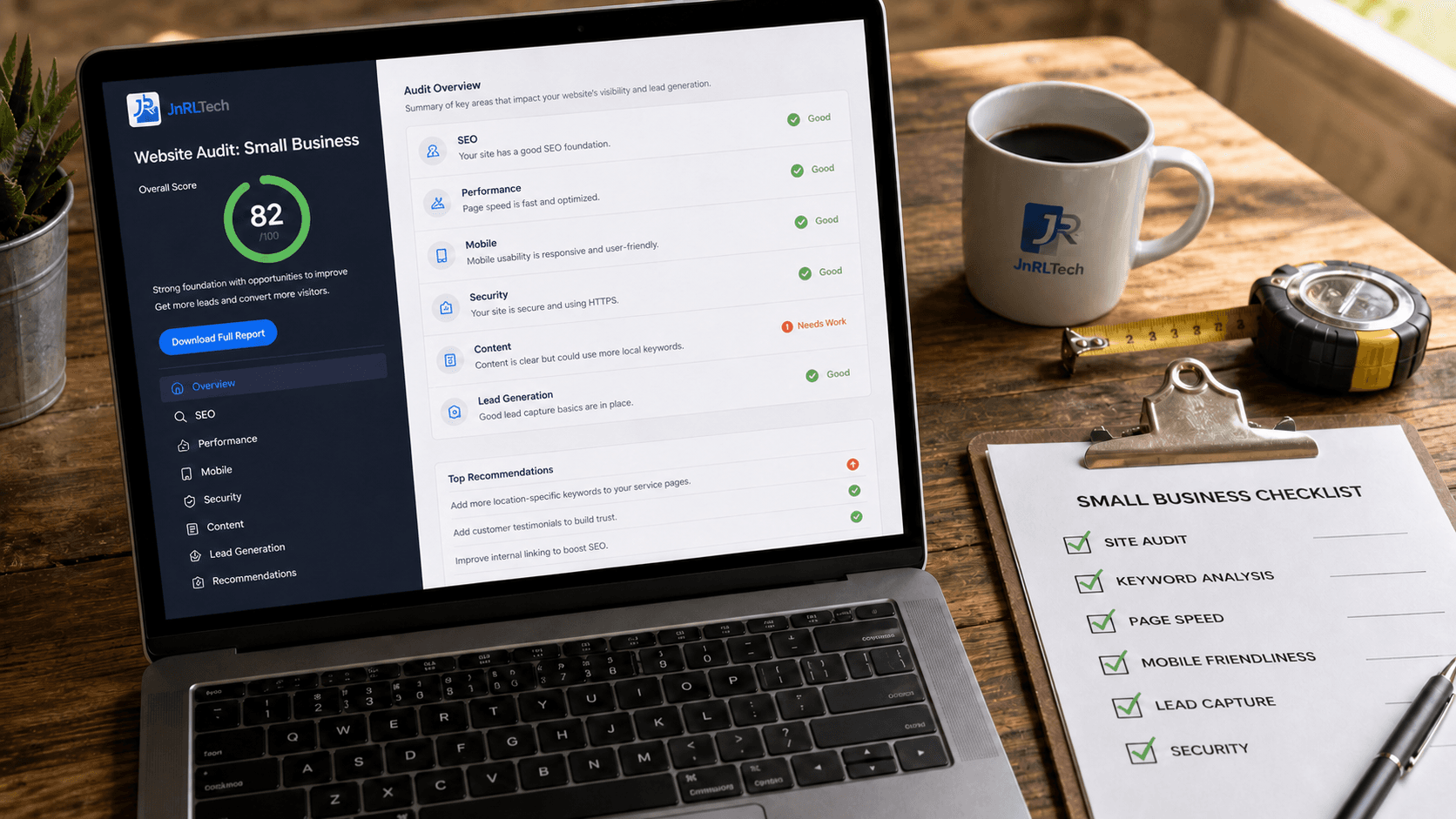
A useful website audit for a local contractor checks 12 things: mobile load speed, Core Web Vitals, mobile usability, a single clear call-to-action, click-to-call, Google Business alignment, local keyword targeting, title/meta tags, schema markup, trust signals (reviews and guarantees), form friction, and analytics tracking.
When an Oklahoma City contractor asks me for a free website audit, I'm not running a generic scanner and emailing a 40-page PDF. I'm looking for the handful of things that actually decide whether a visitor calls you or calls the next result on Google. Here is the exact list I work through, in order.
The 12-point audit, in priority order
- Mobile load speed — over 60% of local searches happen on a phone, often on cellular. If the site is not interactive in a couple of seconds, you lose people before they ever see your work.
- Core Web Vitals — Largest Contentful Paint, interaction latency, and layout shift. Google uses these, and a janky layout reads as "not trustworthy" to a visitor.
- Mobile usability — no pinching, no horizontal scroll, tap targets big enough for a thumb. A site that "works on desktop" but fights you on mobile is effectively broken.
- One obvious next step — a single primary call-to-action above the fold. Most contractor sites bury the one thing they want the visitor to do.
- Click-to-call — on mobile, the phone number should be a tappable link, not an image or plain text.
- Google Business Profile alignment — the name, address (or service area), and services on the site should match the profile exactly so Google trusts the entity.
- Local keyword targeting — does the page actually say what you do and where, in plain language a person would search?
- Title and meta tags — unique, descriptive, and written for a human scanning search results.
- Structured data — LocalBusiness and FAQ schema so search engines and AI assistants can parse your services and answers.
- Trust signals — real reviews, a guarantee, licensing, and named local work. This is what tips a hesitant visitor into a call.
- Form friction — every extra required field costs you leads. Name, email, and "what do you need" is usually enough.
- Analytics — if you cannot see where visitors come from and where they drop off, you are guessing.
What I ignore (and why)
I don't obsess over a perfect 100/100 score on a synthetic speed test, vanity keyword rankings for terms nobody searches, or design trends that don't change whether the phone rings. An audit should map to revenue, not to a tool's grade.
My rule of thumb
If a finding does not change whether an OKC homeowner calls you, it does not belong at the top of an audit.
Key takeaways
- A real audit prioritizes mobile speed, a clear call-to-action, and trust signals over vanity metrics.
- Your site, Google Business Profile, and reviews should tell one consistent story.
- Schema markup makes your services and FAQs readable to both Google and AI assistants.